
Pole barns are tough—but they’re not invincible. Whether it’s for storage, livestock, equipment, or a workspace, these buildings take a beating from temperature swings, moisture, and time. If you're tired of condensation dripping from the roof or fighting rust and rot every year, insulation isn’t a “nice to have”—it’s the fix you've been looking for.
And not just any insulation. Pole Barns Spray foam has stepped in as the one that actually does what it says it will—protect your barn from the stuff that wears it down. Let’s break down exactly how it works, why it matters, and what people usually get wrong about it.
Pole barns don’t do well with trapped moisture. It’s one of the biggest threats to their structure over time.
Trapped humidity turns into condensation, especially in uninsulated metal buildings. This leads to rust on steel panels, rotting of wood posts, mold, mildew, and general structural fatigue. And that’s without any visible leaks—just natural temperature swings.
Closed-cell spray foam hardens into a solid, rigid barrier. Once cured, it doesn’t absorb water and blocks air transfer, which means warm, moist air from inside can’t reach the cold metal surface and condense. No condensation = no rot, rust, or mold.
Fun Fact: Just 1 inch of closed-cell spray foam has a perm rating low enough to qualify as a Class II vapor retarder.
Not all insulation is bad—but most types don’t handle barns very well. Spray foam works differently and adapts better to these spaces.
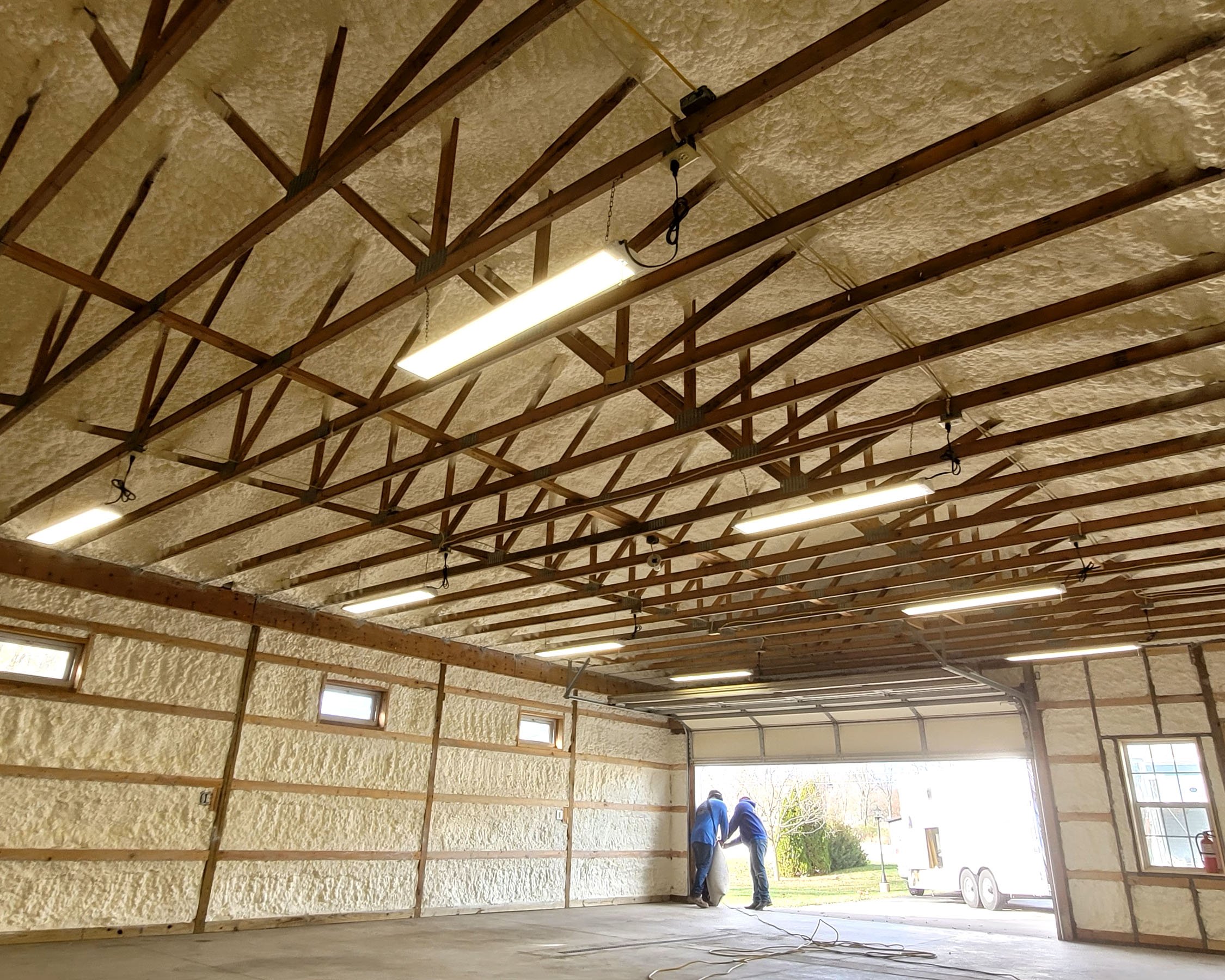
Traditional batts and rolls leave gaps. They sag, they get wet, and they hold moisture like a sponge. Once wet, they lose insulating power and become a breeding ground for mold. In a barn, that’s not just inconvenient—it shortens the building’s lifespan.
Spray foam sticks to wood, metal, and concrete. It expands into cracks, joints, and framing gaps. There’s no slumping, no sagging, and nothing for critters to crawl into. It creates an airtight, seamless layer that holds strong year-round.
| Feature | Spray Foam Insulation | Fiberglass Batts |
|---|---|---|
| Air sealing | Excellent | Poor |
| Moisture resistance | High (closed-cell) | Low |
| Lifespan in pole barn conditions | 20–30+ years | 5–10 years (if dry) |
| Pest resistance | Yes | No |
| Mold growth potential | Very low | High when wet |